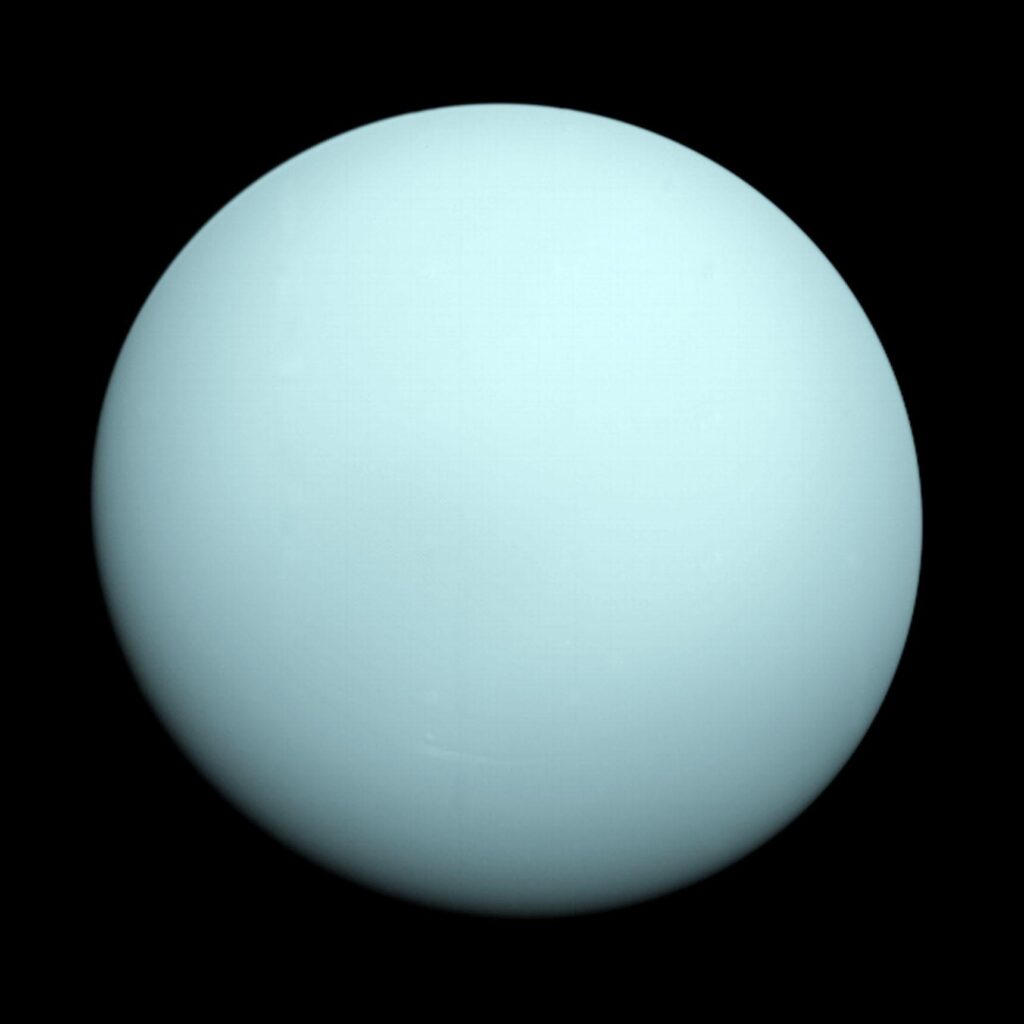
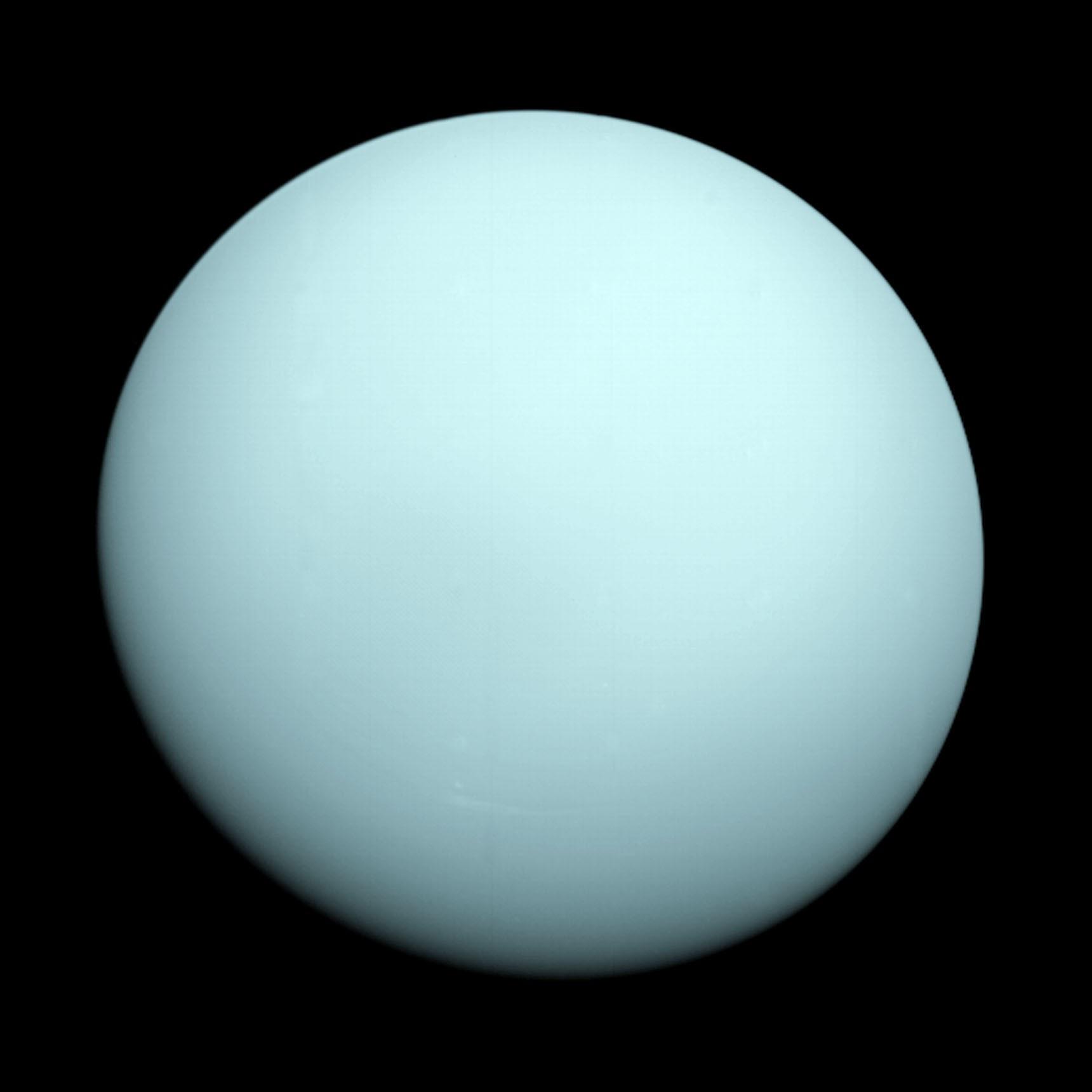
Uranus is the 7th planet from the sun and the third largest planet (by diameter) in the solar system. It is a gaseous ice giant, composed of a dense, icy mantle made up of water, ammonia, and methane, which surrounds a small, rocky core. Outside the mantle is a thick atmosphere composed mostly of hydrogen (83%), Helium (15%), and Methane (2%) Uranus has 29 known moons, the largest of which is less than half the size of Earth’s moon. Uranus has an extreme axial tilt (82.3o), which means its axis of rotation in nearly parallel with its orbital plane. This means that the poles each have about 42 earth years of continuous sunlight, followed by 42 years of continuous darkness. Here is some detailed information about Uranus. Go here to learn about the terms used in the tables about the planets.
Orbital Information about Uranus
| Parameter | Actual Measurement | Scaled to our model |
| Aphelion | 1.86 Billion Miles | 48.1 miles |
| Perihelion | 1.7 Billion Miles | 44 miles |
| Eccentricity | 0.0472 | |
| Sidereal Orbit Period | ~84 earth years | |
| Synodic Orbit Period | ~370 earth days | |
| Ave. Orbital Velocity | 15,209 MPH | 2.08 ft/hr |
| Number of Moons | 29 (known) |
Physical Characteristics of Uranus
| Characteristic | Actual Measurement | Scaled to our model |
| Ave. Diameter | 31,510 miles (4x Earth) | 4.3 feet |
| Mass | 8.68 x 1025 kg (14.5x Earth) | |
| Surface Gravity | 8.649m/s2 (89% of Earth) | |
| Sidereal Day | 17 hrs 14 min 52 sec | |
| Synodic Day | 17 hrs 14 min 51 sec |
Visualizing Uranus in our scale model of the solar system
A 4 person kitchen table
In this model of the solar system, Uranus would be a little over 4′ in diameter, roughly that of a 4 person kitchen table.

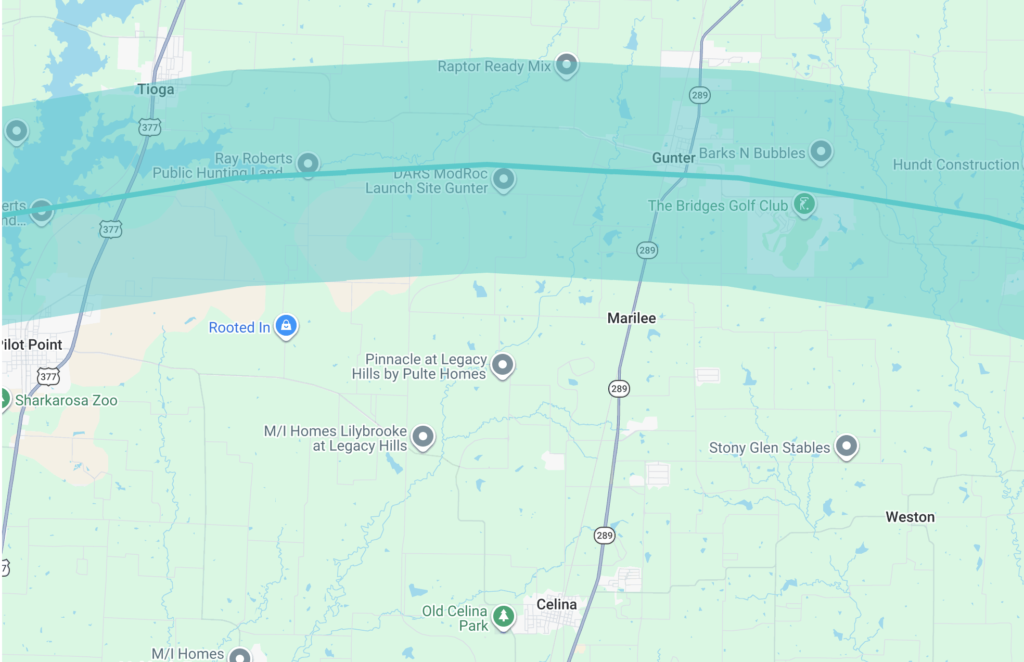
Here is what the orbital path of Uranus would look like overlaid north of Dallas. Visit our orbits page to see this on an interactive map.
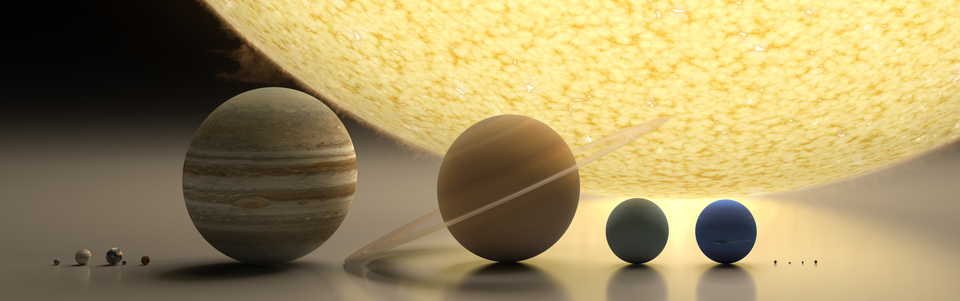
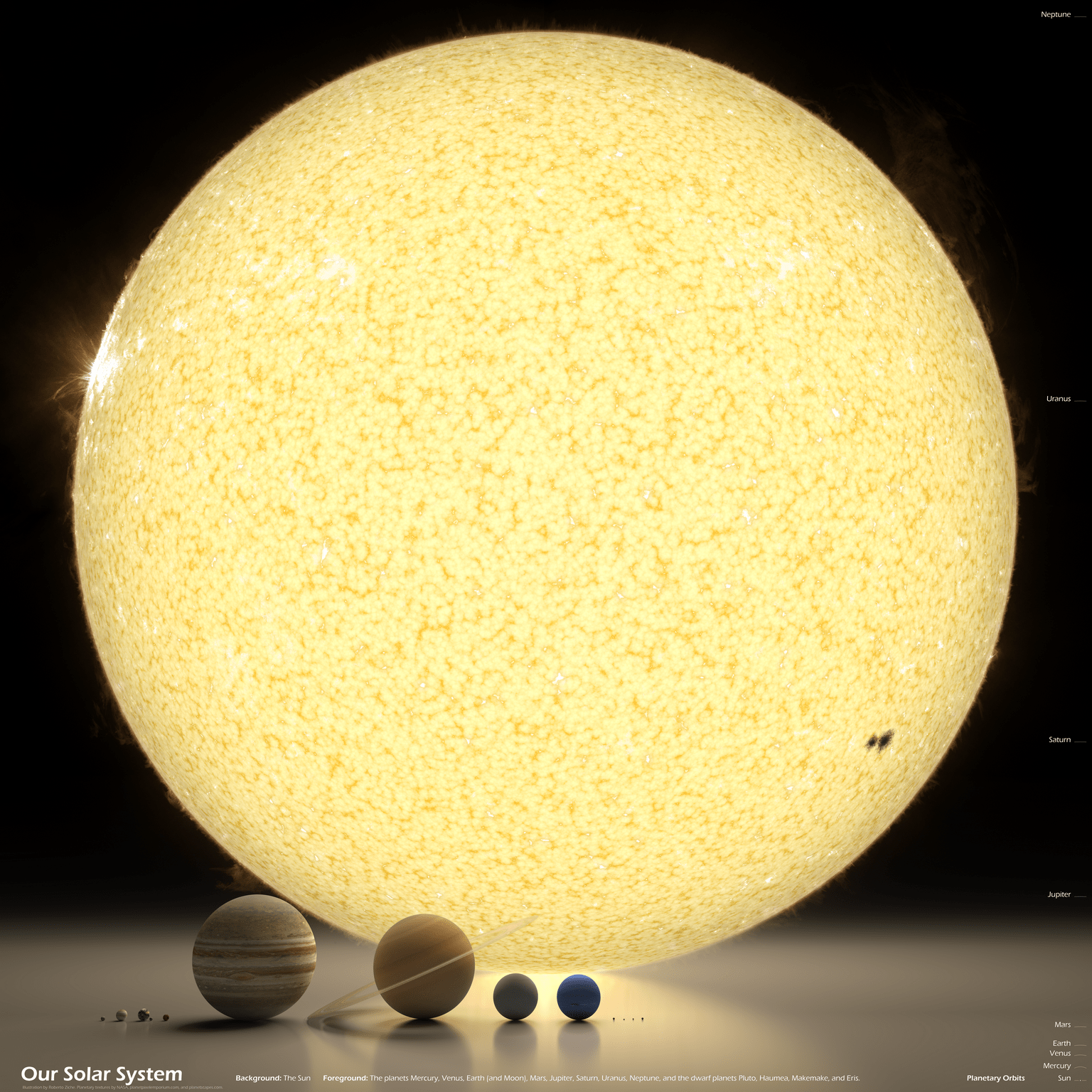
Visualizing the primary objects in the solar system, rendered to scale