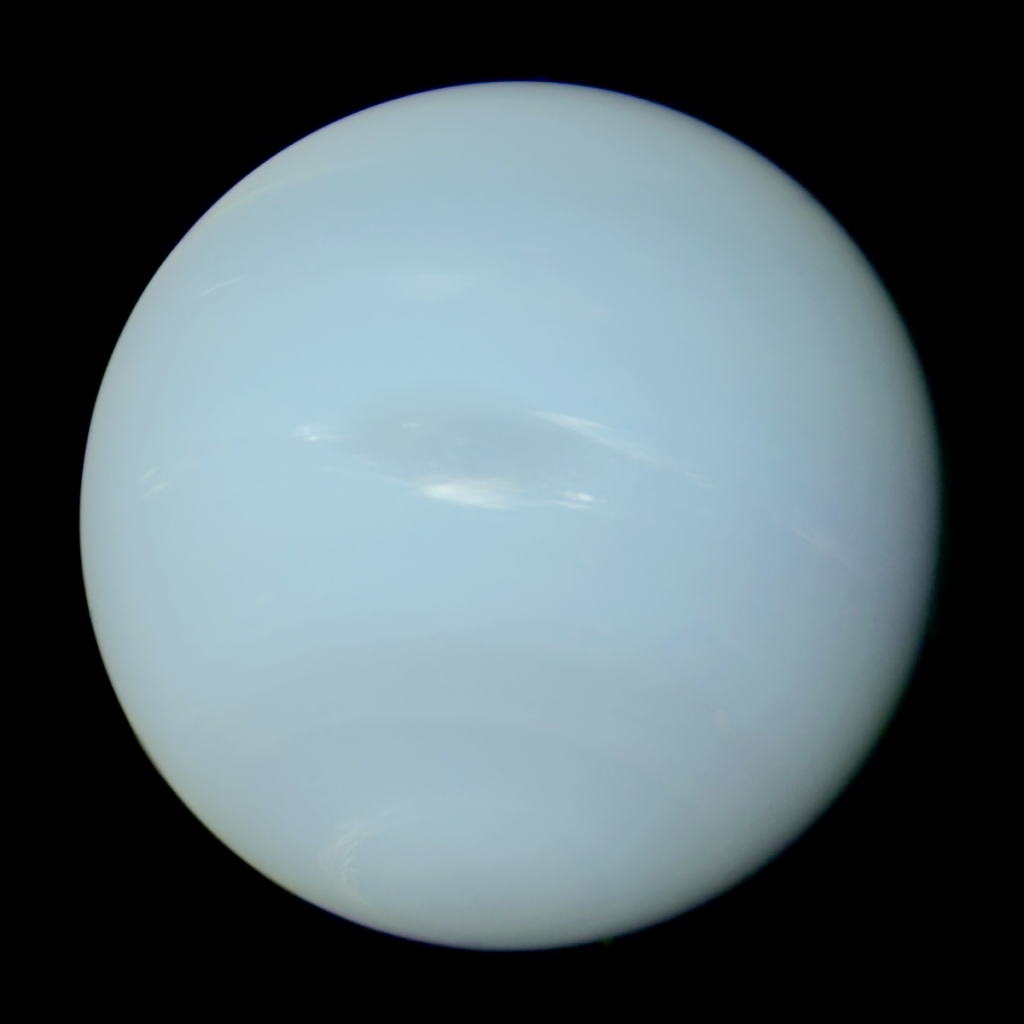
Neptune is the 8th planet from the sun and the third largest planet (by mass) in the solar system. Once Pluto was removed from the planet club, Neptune became the furthest planet from the sun in the solar system (although our model still includes Pluto). Neptune has an inner core composed of iron, nickel and silicates. The mantel of Neptune is composed mostly of water, ammonia, and methane. The atmosphere is composed mostly of hydrogen (80%) and Helium (19%) with trace amounts of methane. Massive storms, like the Great Red Spot on Jupiter, have been seen at various times and in various locations on Neptune with wind speeds as high as 1,300 MPH. Triton, the largest of Neptune’s moons, is the 7th largest moon in the solar system, and it thought to have been a dwarf planet in the Kuiper belt that was captured by Neptune’s gravity. Here is some detailed information about Neptune. Go here to learn about the terms used in the tables about the planets.
Orbital Information about Neptune
| Parameter | Actual Measurement | Scaled to our model |
| Aphelion | 2.82 Billion Miles | 72.9 miles |
| Perihelion | 2.77 Billion Miles | 71.6 miles |
| Eccentricity | 0.0087 | |
| Sidereal Orbit Period | 164.8 earth years | |
| Synodic Orbit Period | ~367.5 earth days | |
| Ave. Orbital Velocity | 12,190 MPH | 1.66 ft/hr |
| Number of Moons | 16 (known) |
Physical Characteristics of Neptune
| Characteristic | Actual Measurement | Scaled to our model |
| Ave. Diameter | 30,600 miles (3.9x Earth) | 4.17 feet |
| Mass | 1.02 x 1026 kg (17.1x Earth) | |
| Surface Gravity | 11.27m/s2 (1.15x Earth) | |
| Sidereal Day | 16 hrs 6 min 36 sec | |
| Synodic Day | 16 hrs 6 min 36 sec |
Visualizing Neptune in our scale model of the solar system
A 4 person kitchen table
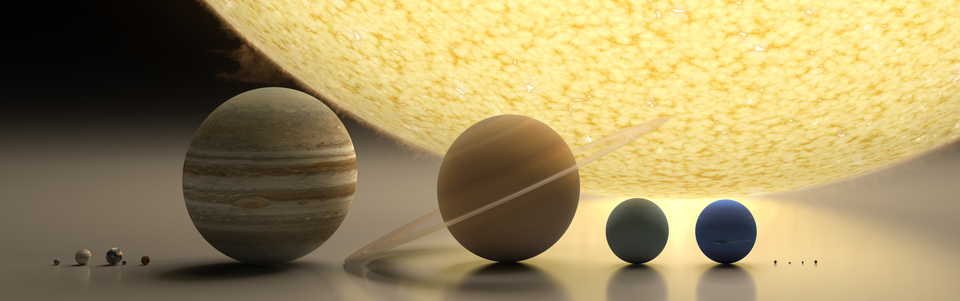
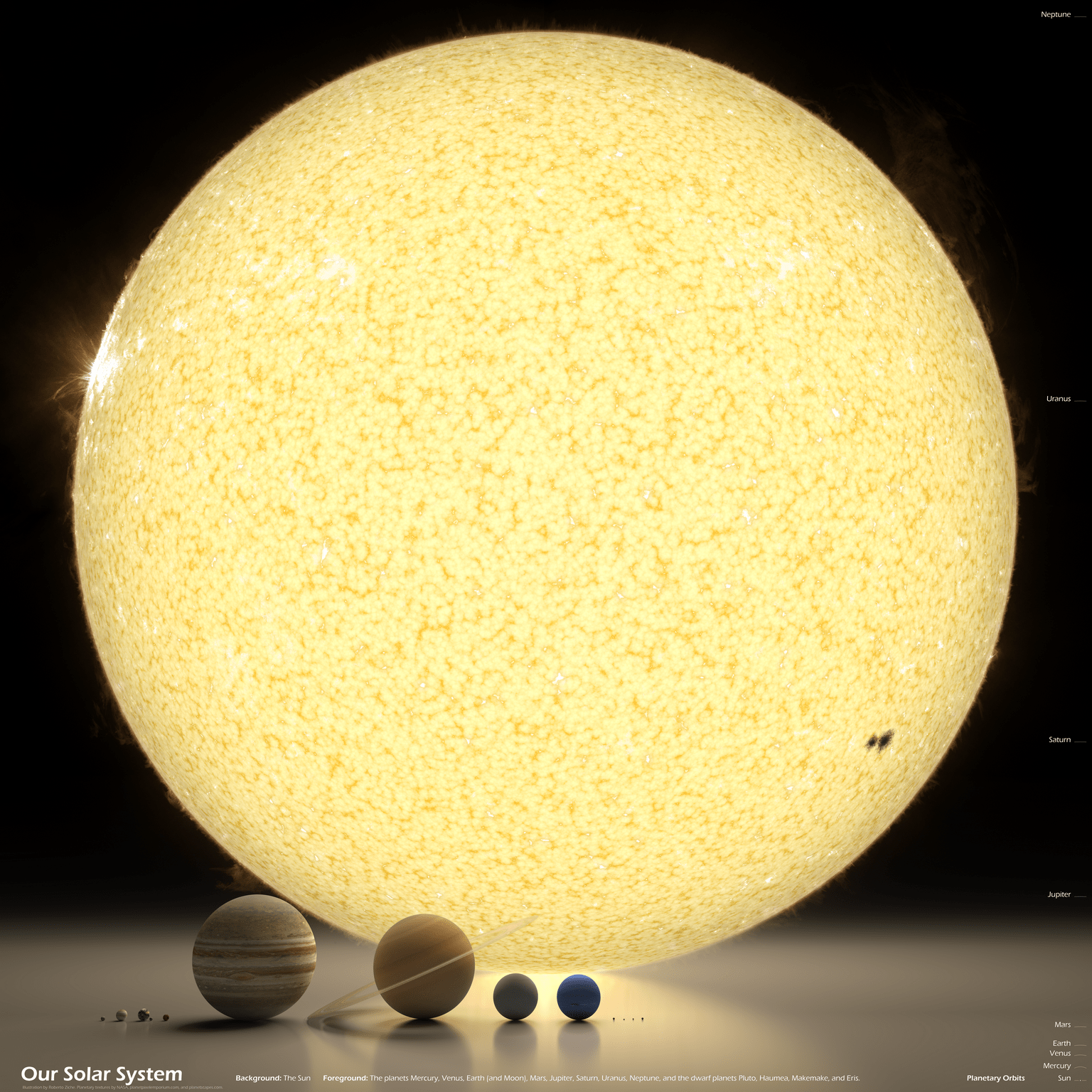
In this model of the solar system, Neptune, like Uranus would be a little over 4′ in diameter, roughly that of a 4 person kitchen table. Neptune is only slightly smaller than Uranus.

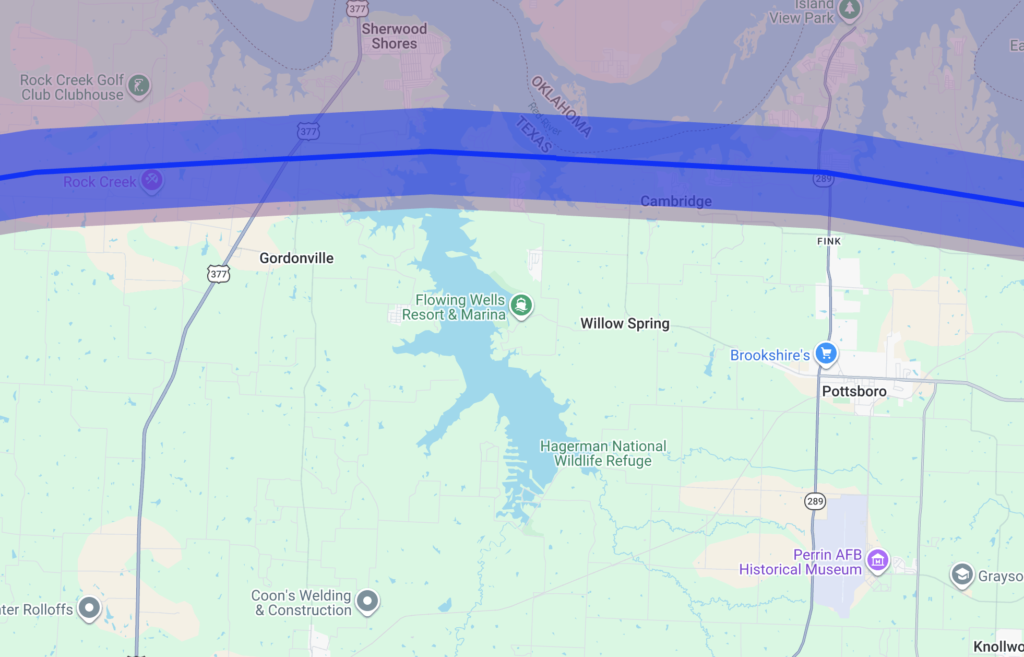
Here is what the orbital path of Neptune would look like overlaid north of Dallas. Visit our orbits page to see this on an interactive map.
Visualizing the primary objects in the solar system, rendered to scale