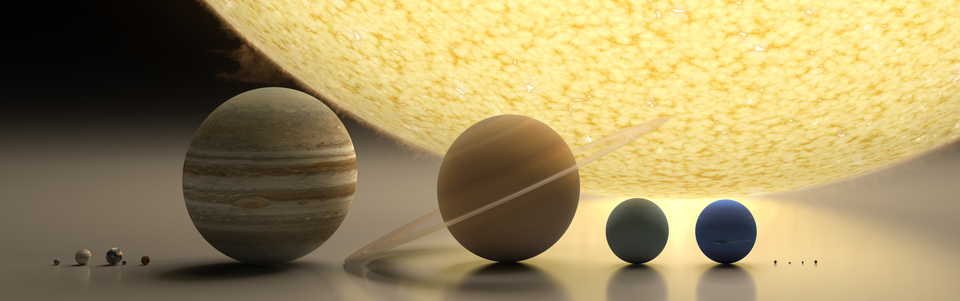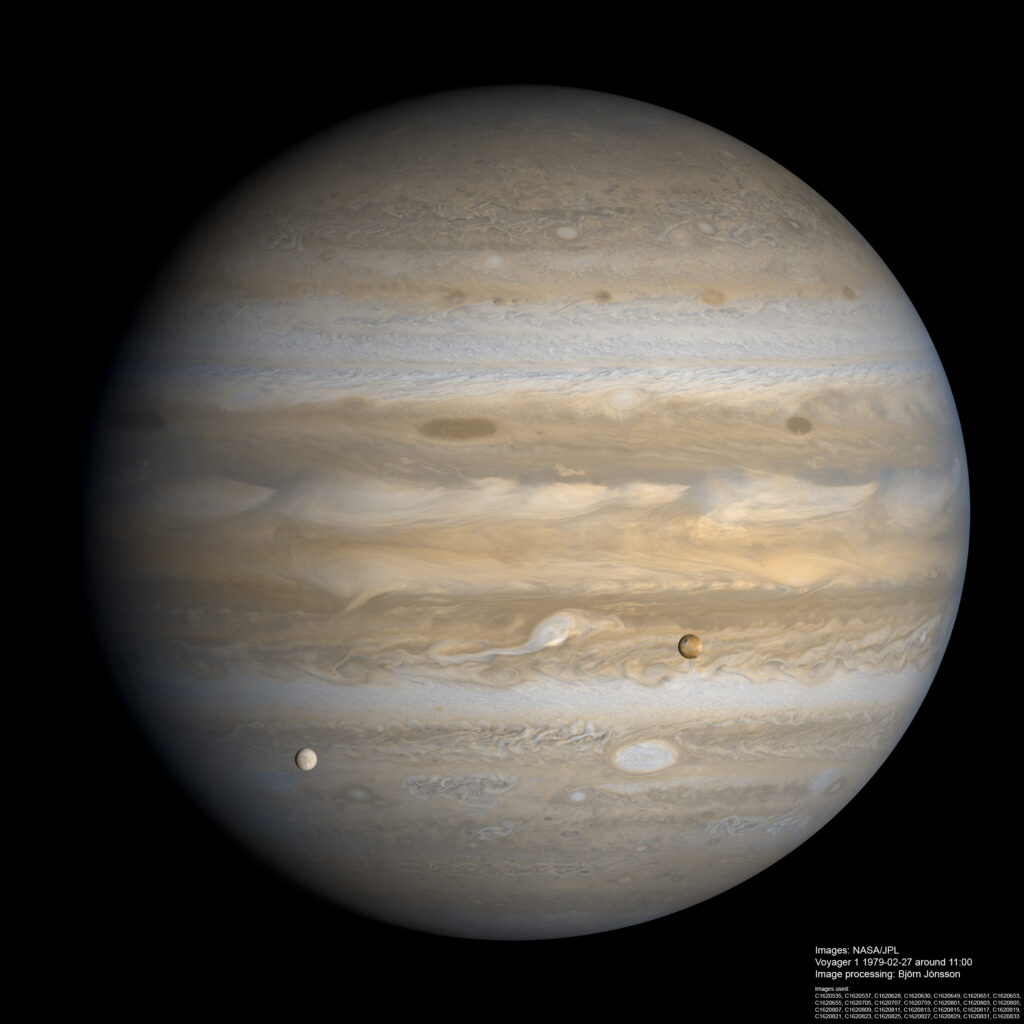
Jupiter is the largest planet in the solar system, a gas giant. It has a mass nearly 2.5 times the mass of all the other planets in the solar system combined. Jupiter is composed almost entirely of Hydrogen (~80%), and Helium (~10%). It is the fastest rotating of all of the planets, which means that it’s equatorial bulge (~7%) is actually visible through a telescope. There are 115 known moons of Jupiter, the largest of which, Ganymede, is abou 8% larger than the planet Mercury. The three icy moons of Jupiter – Ganymede, Europa, and Callisto, are believed to contain salt water oceans beneath their icy crusts which may be capable of supporting life. Here is some detailed information about Jupiter. Go here to learn about the terms used in the tables about the planets.
Orbital Information about Jupiter
| Parameter | Actual Measurement | Scaled to our model |
| Aphelion | 507.2 Million Miles | 13.1 miles |
| Perihelion | 460.1 Million Miles | 11.9 miles |
| Eccentricity | 0.0489 | |
| Sidereal Orbit Period | ~4,333 earth days | |
| Synodic Orbit Period | ~399 earth days | |
| Ave. Orbital Velocity | 29,211 MPH | 3.99 ft/hr |
| Number of Moons | 115 (known) |
Physical Characteristics of Jupiter
| Characteristic | Actual Measurement | Scaled to our model |
| Ave. Diameter | 86,840 miles (10.97x Earth) | 11.84 feet |
| Mass | 1.9 x 1027 kg (318x Earth) | |
| Surface Gravity | 24.8 m/s2 (2.53x Earth) | |
| Sidereal Day | 9 hrs 55 min 30 sec | |
| Synodic Day | 9 hrs 55 min 33 sec |
Visualizing Jupiter in our scale model of the solar system
Playground Climbing Dome
In this model of the solar system, Jupiter would be about 12′ in diameter, roughly the size of a medium sized playground climbing dome.

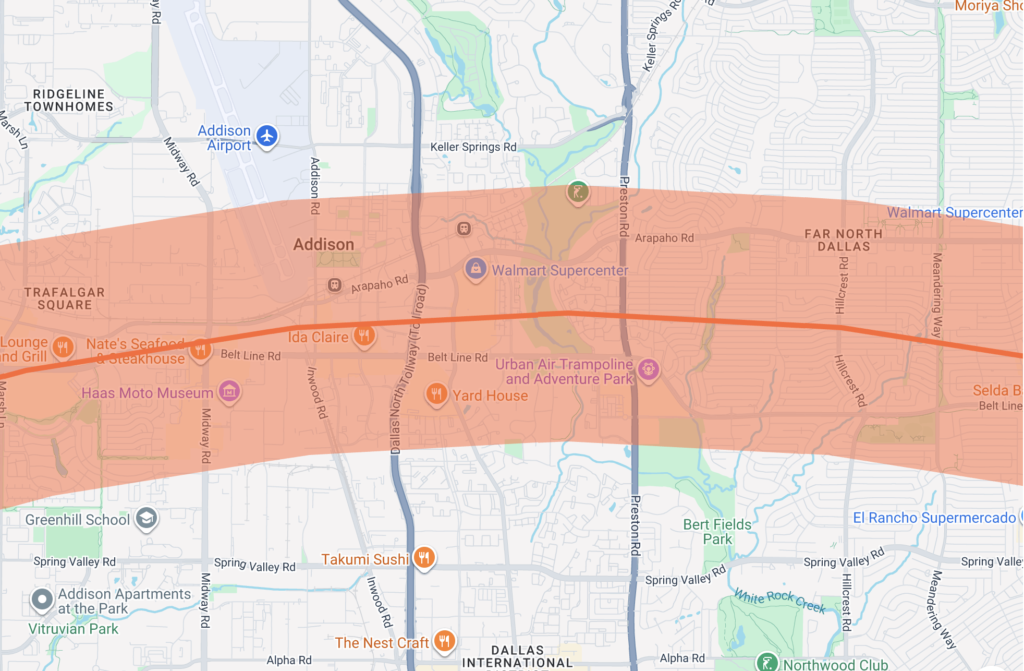
Here is what the orbital path of Jupiter would look like overlaid north of Dallas. Visit our orbits page to see this on an interactive map.
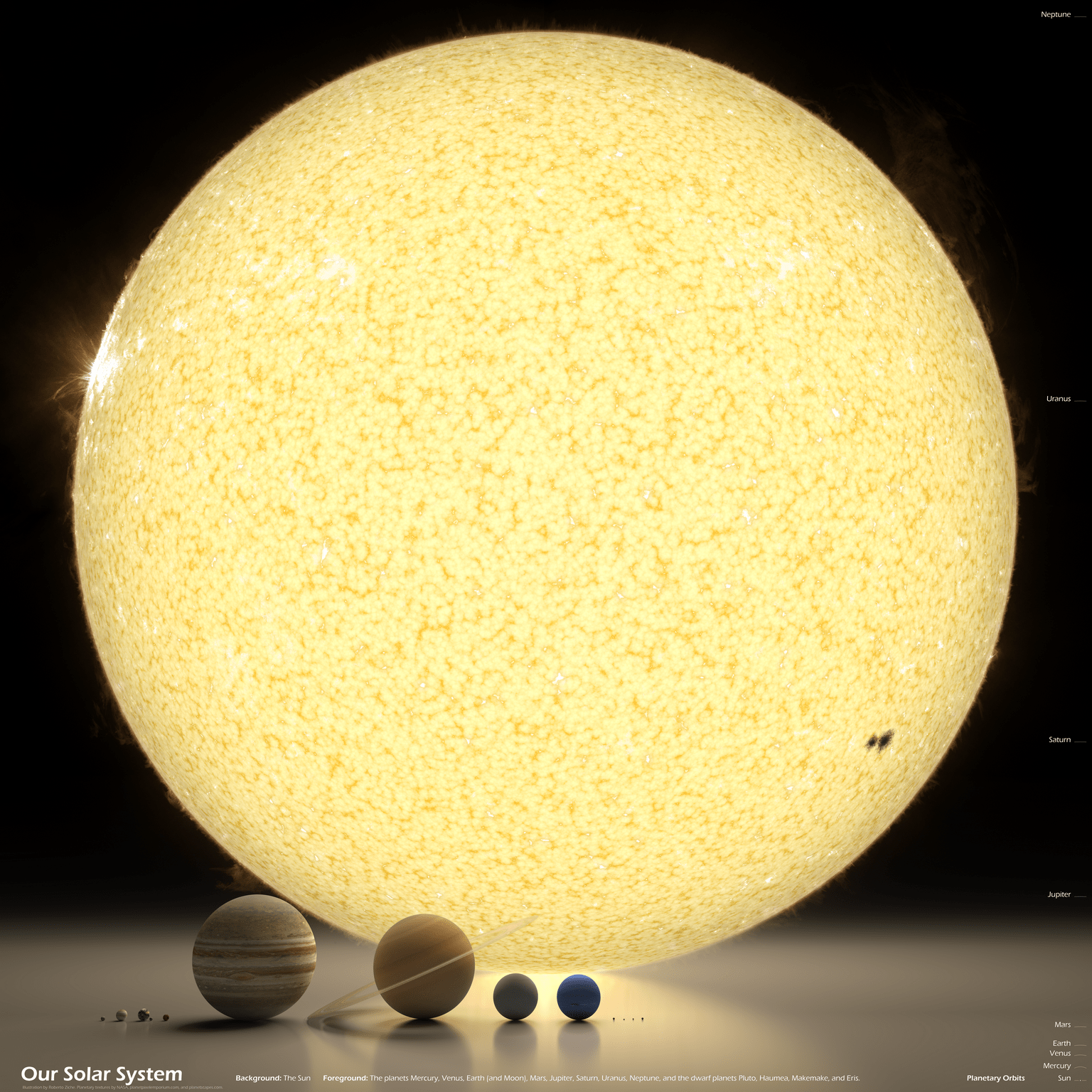
Visualizing the primary objects in the solar system, rendered to scale