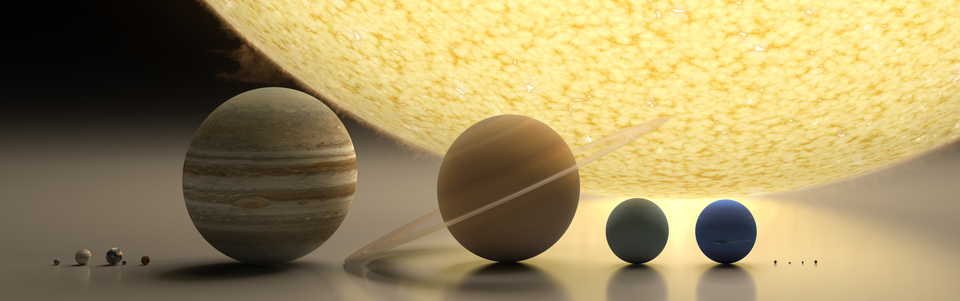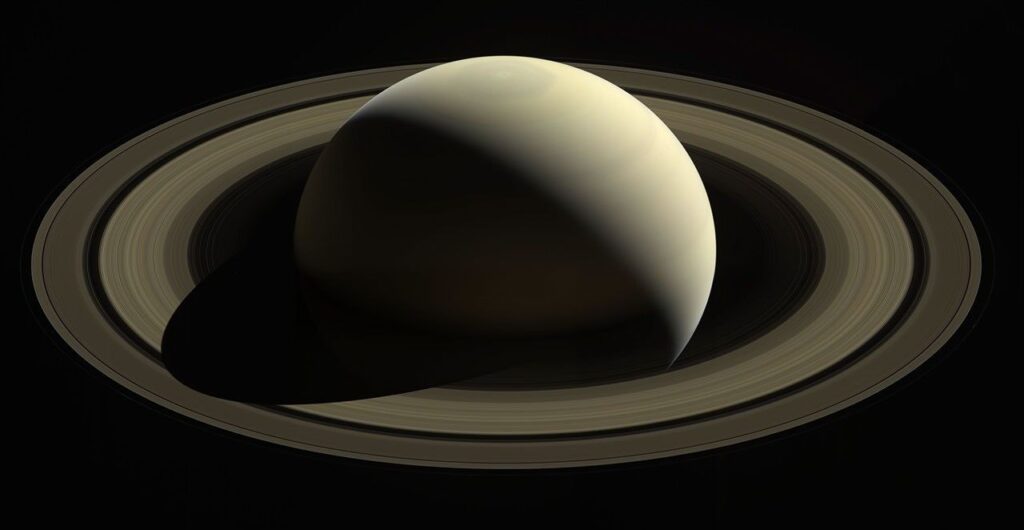

Saturn, like Jupiter, is another gas giant, the second largest planet in the solar system and the 6th planet from the Sun. It is famous because of its rings, composed mostly of ice and dust, which are easily visible with a backyard telescope. Saturn is believed to be composed of a rocky inner core, surrounded by metallic hydrogen, then layers of liquid hydrogen and liquid helium and finally an outer layer of gas. Saturn has at least 292 moons, not including the small satellites embedded in the rings. Titan, the largest moon of Saturn and 2nd largest in the solar system, is larger than the planet Mercury, and it is the only moon known to have a dense atmosphere (about 45% denser than that of Earth). Here is some detailed information about Saturn. Go here to learn about the terms used in the tables about the planets.
Orbital Information about Saturn
| Parameter | Actual Measurement | Scaled to our model |
| Aphelion | 941.3 Million Miles | 24.3 miles |
| Perihelion | 840.6 Million Miles | 21.7 miles |
| Eccentricity | 0.0565 | |
| Sidereal Orbit Period | ~10,756 earth days | |
| Synodic Orbit Period | ~378 earth days | |
| Ave. Orbital Velocity | 21,651 MPH | 2.96 ft/hr |
| Number of Moons | 292 (known) |
Physical Characteristics of Jupiter
| Characteristic | Actual Measurement | Scaled to our model |
| Ave. Diameter | 72,360 miles (9.1x Earth) | 9.87 feet |
| Mass | 5.683 x 1026 kg (95x Earth) | |
| Surface Gravity | 10.44 m/s2 (1.065x Earth) | |
| Sidereal Day | 10 hrs 33 min 38 sec | |
| Synodic Day | 10 hrs 39 min |
Visualizing Saturn in our scale model of the solar system
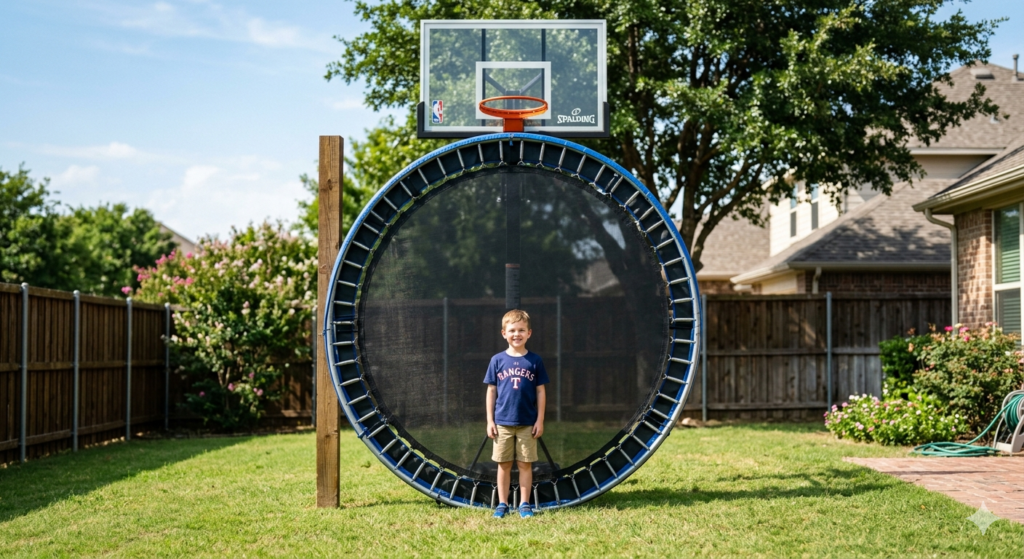
A 10′ Trampoline
In this model of the solar system, Saturn, without its rings, would be about 10′ in diameter, roughly that of a medium-sized backyard trampoline.
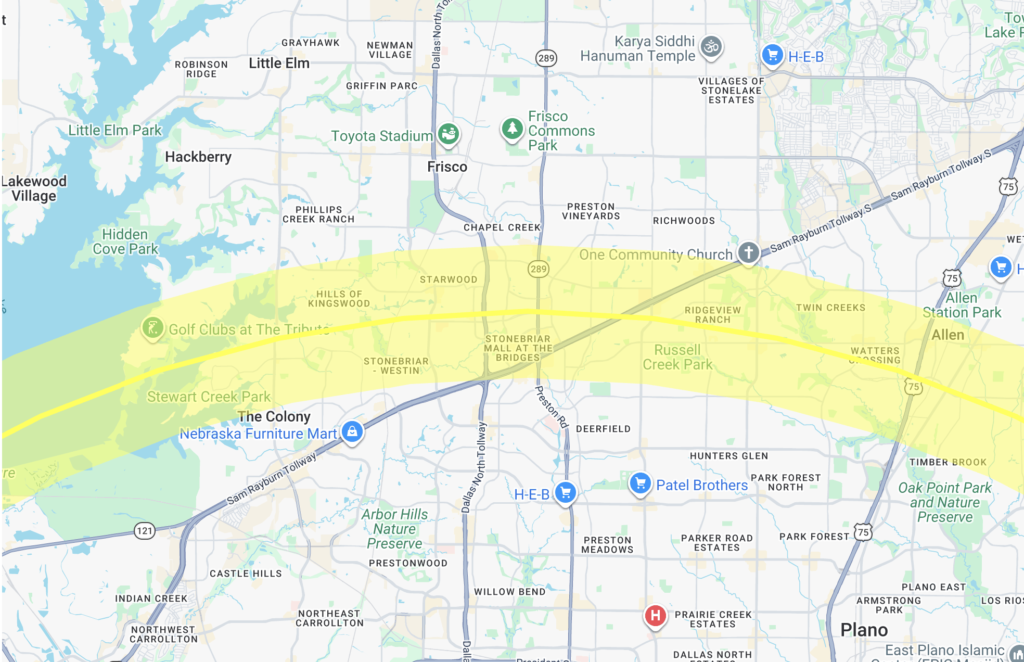
Here is what the orbital path of Saturn would look like overlaid north of Dallas. Visit our orbits page to see this on an interactive map.
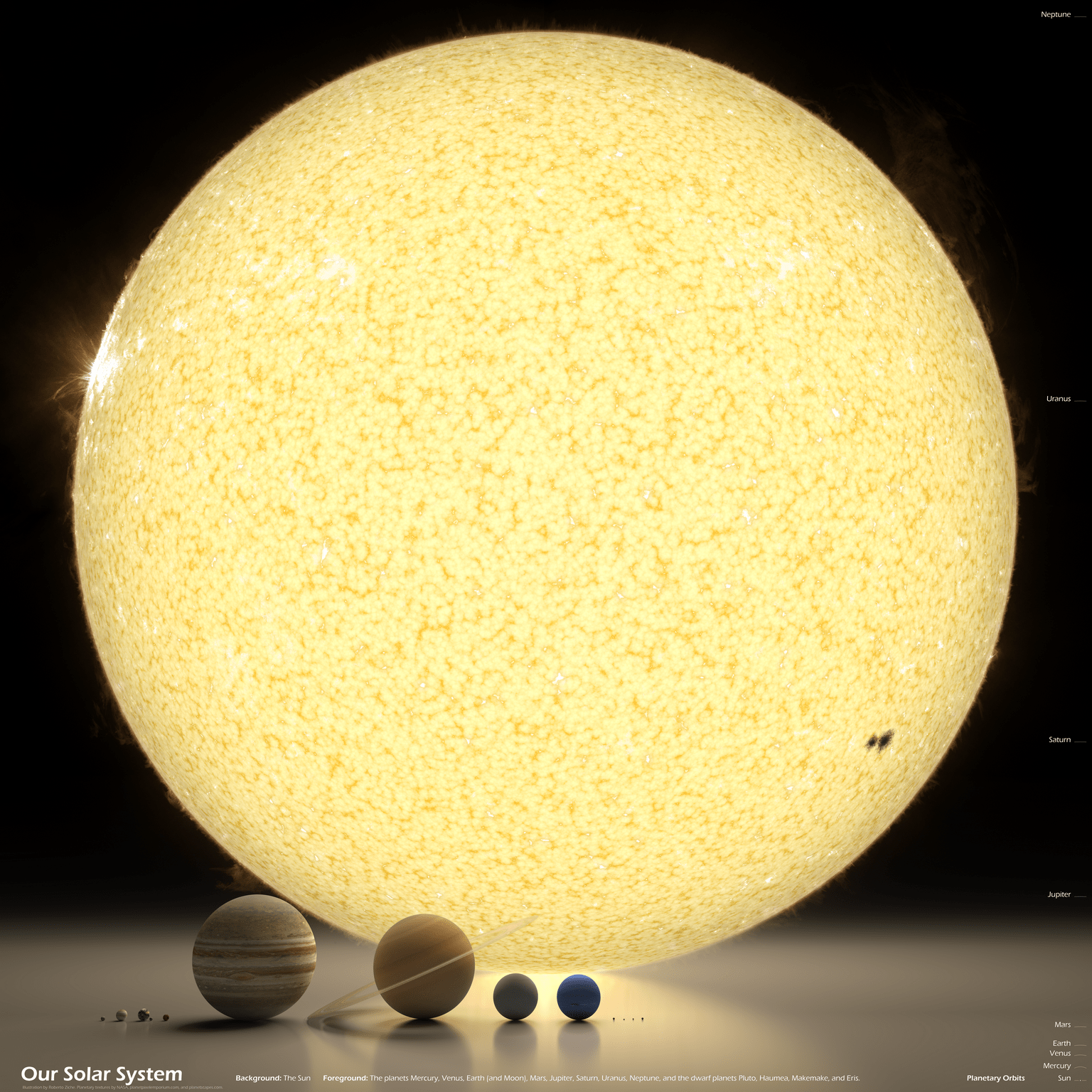
Visualizing the primary objects in the solar system, rendered to scale