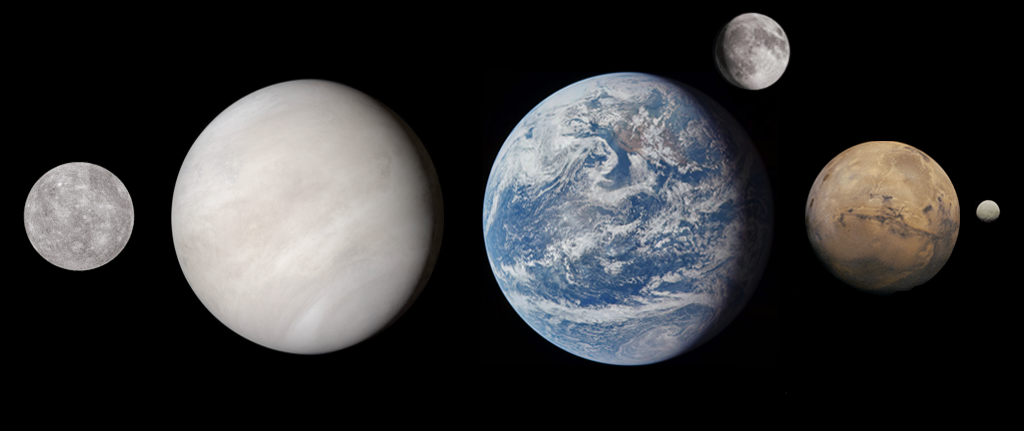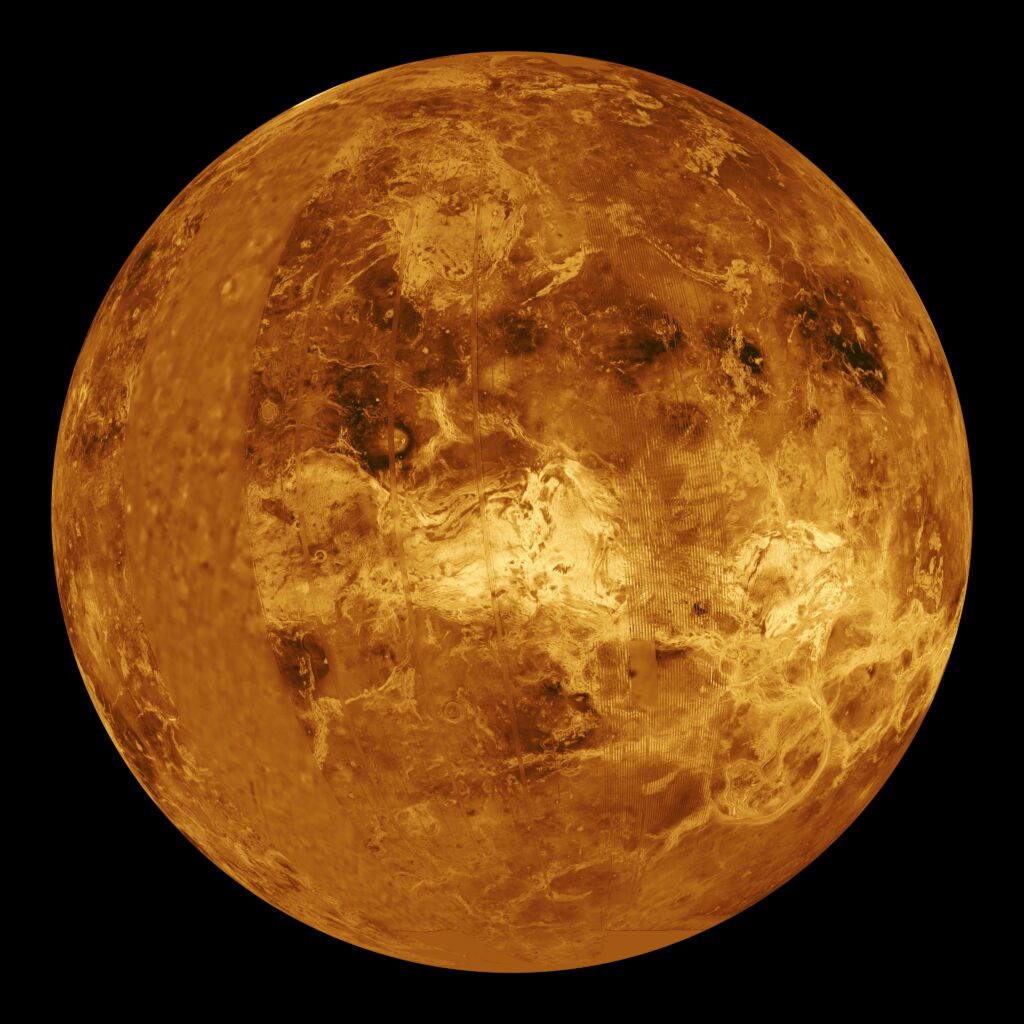
Venus is the 2nd planet from the sun and is very close in size to Earth. Venus is also a rocky planet, but unlike Mercury, Venus has a thick atmosphere, much more dense than that of Earth. The atmosphere is composed mostly of carbon dioxide, but there is a thick cloud layer of sulfuric acid that covers the whole planet. The surface atmospheric pressure is 92x greater than on earth (roughly equivalent to the pressure felt 900m deep in the ocean). The mean surface temperature on Venus is around 464o C (867o F). Needless to say, Venus is a very inhospitable place. Here is some detailed information about Venus. Go here to learn about the terms used in the tables about the planets.
Orbital Information about Venus
| Parameter | Actual Measurement | Scaled to our model |
| Aphelion | 67.7 Million Miles | 1.75 miles |
| Perihelion | 66.8 Million Miles | 1.73 miles |
| Eccentricity | 0..0068 | |
| Sidereal Orbit Period | ~225 earth days | |
| Synodic Orbit Period | ~584 earth days | |
| Ave. Orbital Velocity | 78,328 MPH | 10.7 ft/hr |
| Number of Moons | 0 |
Physical Characteristics of Venus
| Characteristic | Actual Measurement | Scaled to our model |
| Ave. Diameter | 7520 miles (95% of Earth) | 12.3 inches |
| Mass | 4.86 x 1024 kg (82% of Earth) | |
| Surface Gravity | 8.87 m/s2 (90% of Earth’s) | |
| Sidereal Day | 243 Earth days | |
| Synodic Day (retrograde) | 117 Earth Days |
Visualizing Venus in our scale model of the solar system
A Large Pizza
In this model of the solar system, Venus would be about 12″ in diameter, or roughly the size of a large pizza. It would not be nearly as tasty as a pizza, however.

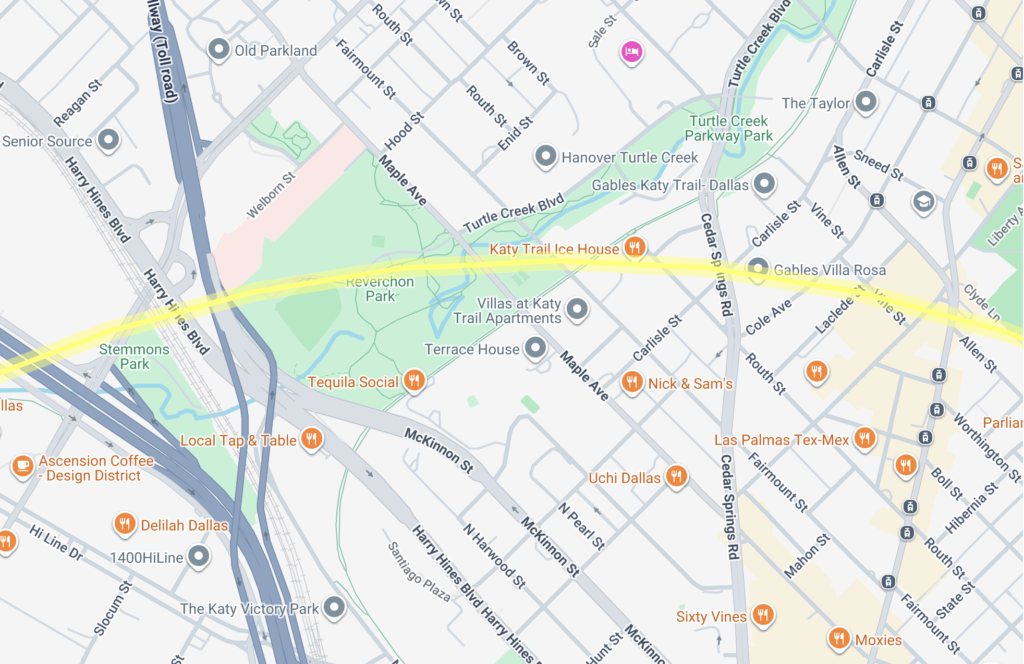
Here is what the orbital path of Venus would look like overlaid north of Dallas. Visit our orbits page to see this on an interactive map.
Size comparisons of the inner planets (and Ceres)