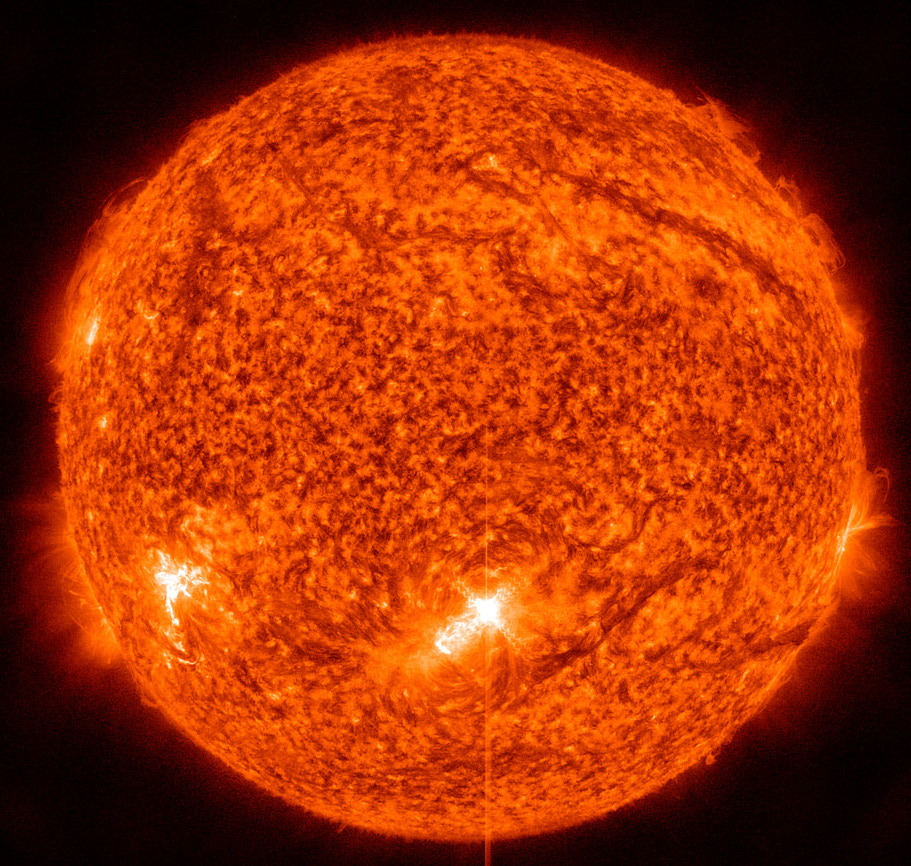
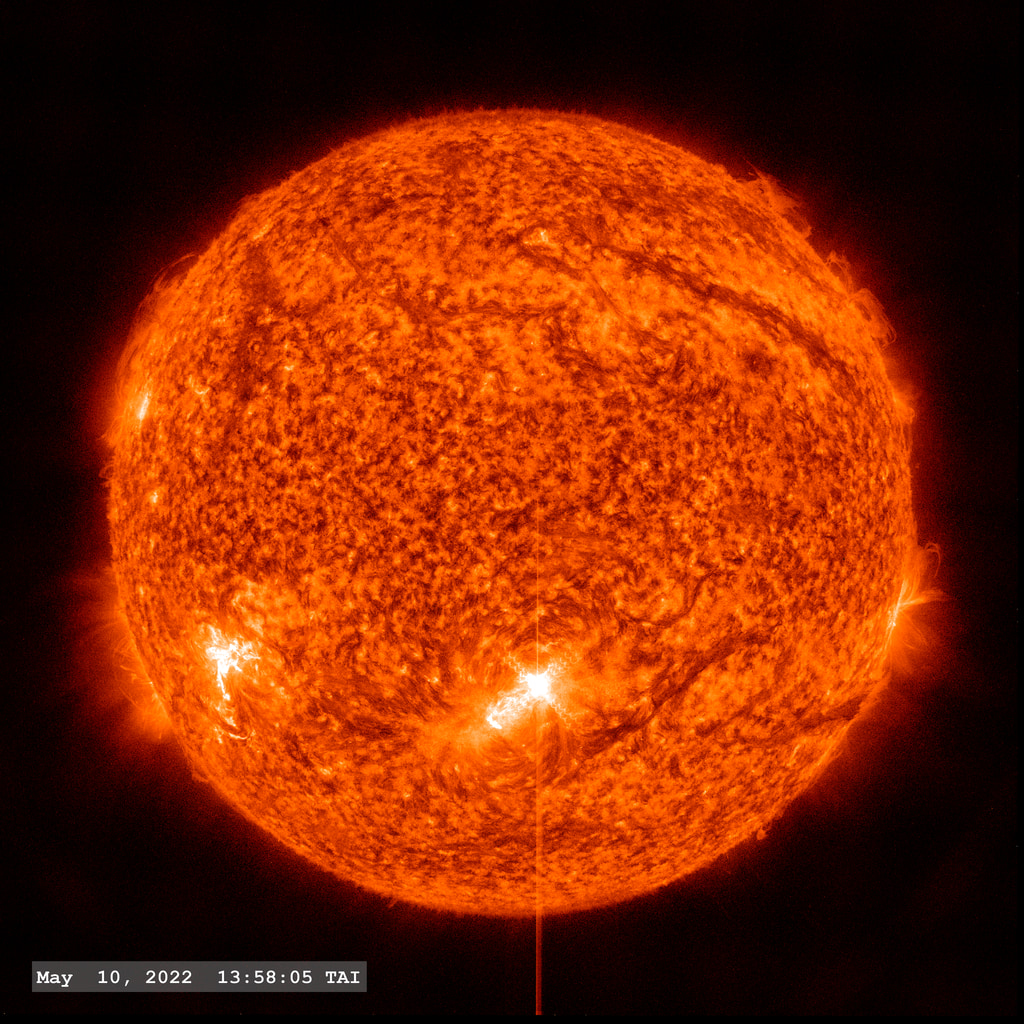
The Sun is the star at the center of our solar system. It is considered a G-type main sequence star. It is composed primarily of hydrogen (73%) and helium (25%), with more dense elements like oxygen, carbon, neon, and iron, which it most likely inherited from the interstellar medium from which it formed. This material most likely came from the supernova events of other stars in the galaxy. The sun accounts for about 99.9% of the entire mass of the solar system, and provides the energy that supports life on Earth. The energy is produced in the sun by nuclear fusion, as it fuses hydrogen into helium. The mass of the helium formed by the fusion reaction is less than the mass of the hydrogen that was fused to create it. That mass is converted into energy according to the famous equation introduced by Albert Einstein; E = mc2 (where c represents the speed of light). It is estimated that the sun formed approximately 4.6 billion years ago. Here is some general information about the Sun.
| Characteristic | Actual Measurement | Scaled to our model |
| Ave. Diameter | 864,500 Miles (109x Earth) | 118 feet |
| Ave Distance from Earth | 92.95 Million Miles | 2.4 miles |
| Mass | 1.99 x 1030 kg (332,950x Earth) | |
| Surface gravity | 274 m/s2 (28x Earth) | |
| Equatorial rotational period | ~25.6 Earth Days | |
| Polar rotational period | ~33.5 Earth days |
Visualizing the Sun in our model of the solar system

Reunion Tower Globe
As the center of our model of the solar system, the globe atop Reunion Tower represents the sun, at about 118′ in diameter, making the scale of our solar system 1:38,702,800
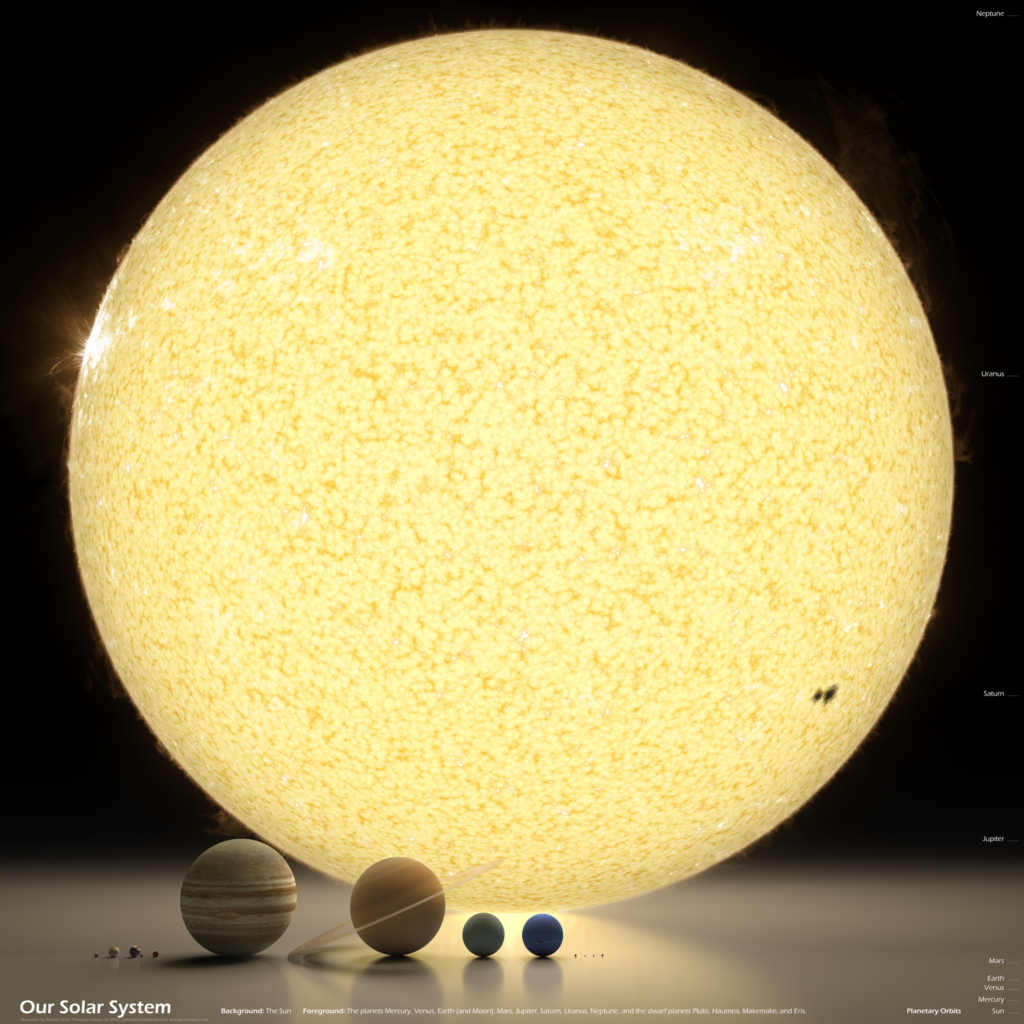
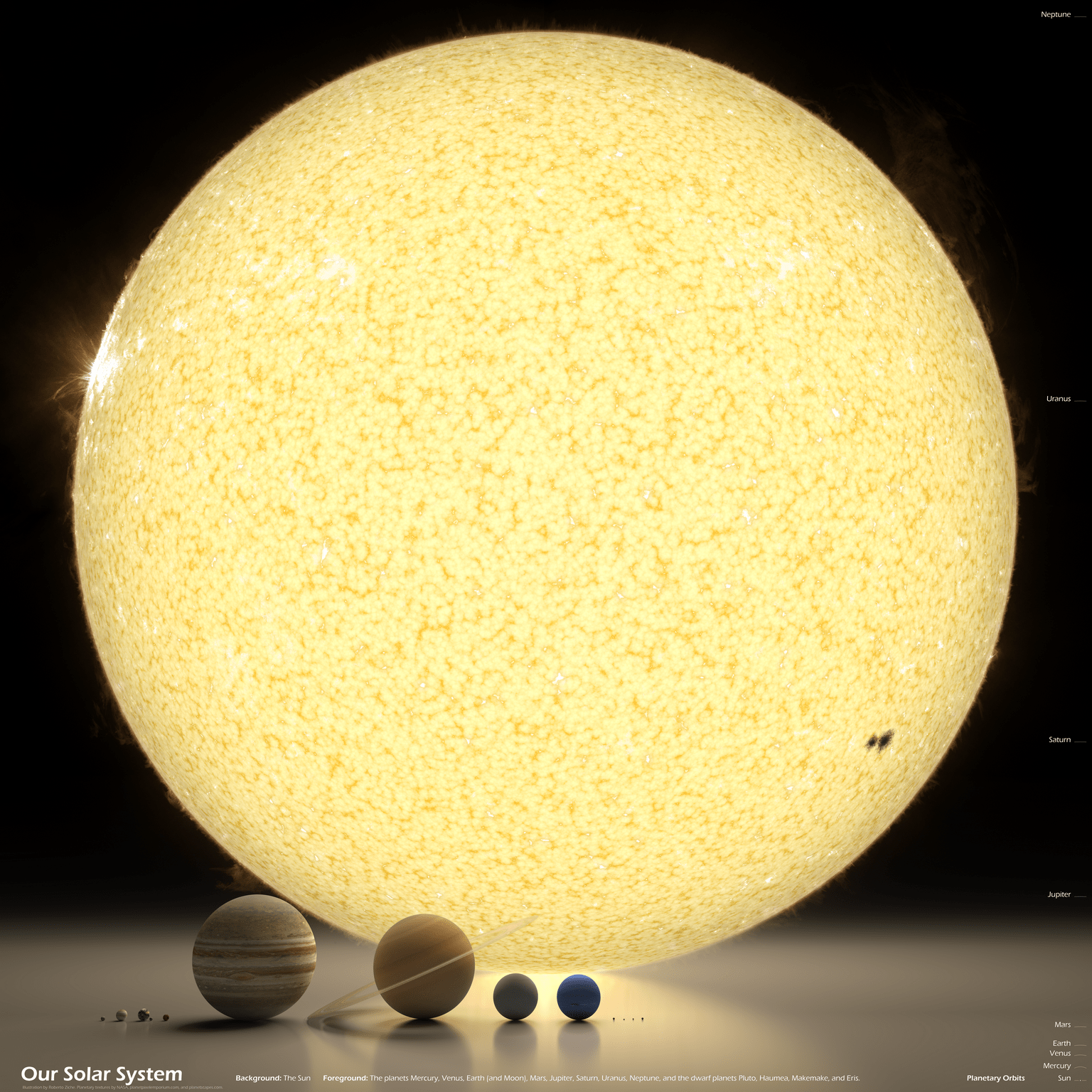
Visualizing the scale of the objects in our solar system
The artist Roberto Ziche created an excellent 3D rendering of the primary objects in our solar system, all to scale.