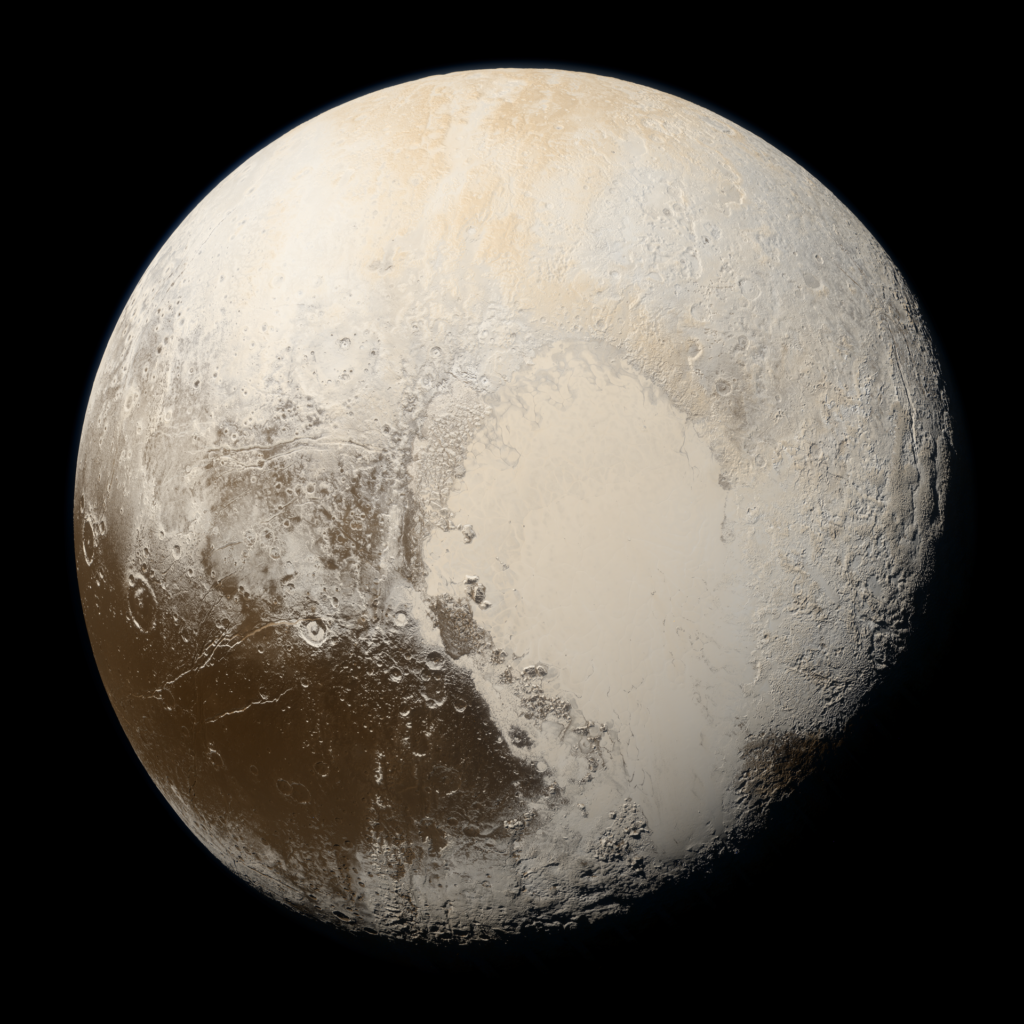
While Pluto is no longer considered a planet, it is a well known dwarf planet inside the Kuiper belt, and is planned to be included in this model to represent the outer reaches of the solar system. Pluto is composed mostly of rock and ice and it smaller than Earth’s Moon. Pluto has five known moons, the largest of which, Charon, is a little over half the size of Pluto itself. Since Pluto and Charon are tidally locked, and the center of mass of their two orbits does not reside inside either of them, they are often considered a binary system. Because of this, we intend to install objects representing both Pluto and Charon in our model of the solar system. Here is some detailed information about Pluto and Charon. Go here to learn about the terms used in the tables about the planets.
Orbital Information about Pluto/Charon
| Parameter | Actual Measurement | Scaled to our model |
| Aphelion | 4.59 Billion Miles | 118.4 miles |
| Perihelion | 2.76 Billion Miles | 71.2 miles |
| Eccentricity | 0.2488 | |
| Sidereal Orbit Period | ~248 earth years | |
| Synodic Orbit Period | ~366.7 earth days | |
| Ave. Orbital Velocity | 10,601 MPH | 1.45 ft/hr |
| Number of Moons | 5 (known) |
Physical Characteristics of Pluto
| Characteristic | Actual Measurement | Scaled to our model |
| Ave. Diameter | 1476 miles (18.7% of Earth) | 2.42 inches |
| Mass | 1.3 x 10²² kg (0.22% of Earth) | |
| Surface Gravity | 0.62m/s2 (6.32% of Earth) | |
| Sidereal Day | ~6.4 Earth days | |
| Synodic Day | ~6.4 Earth days |
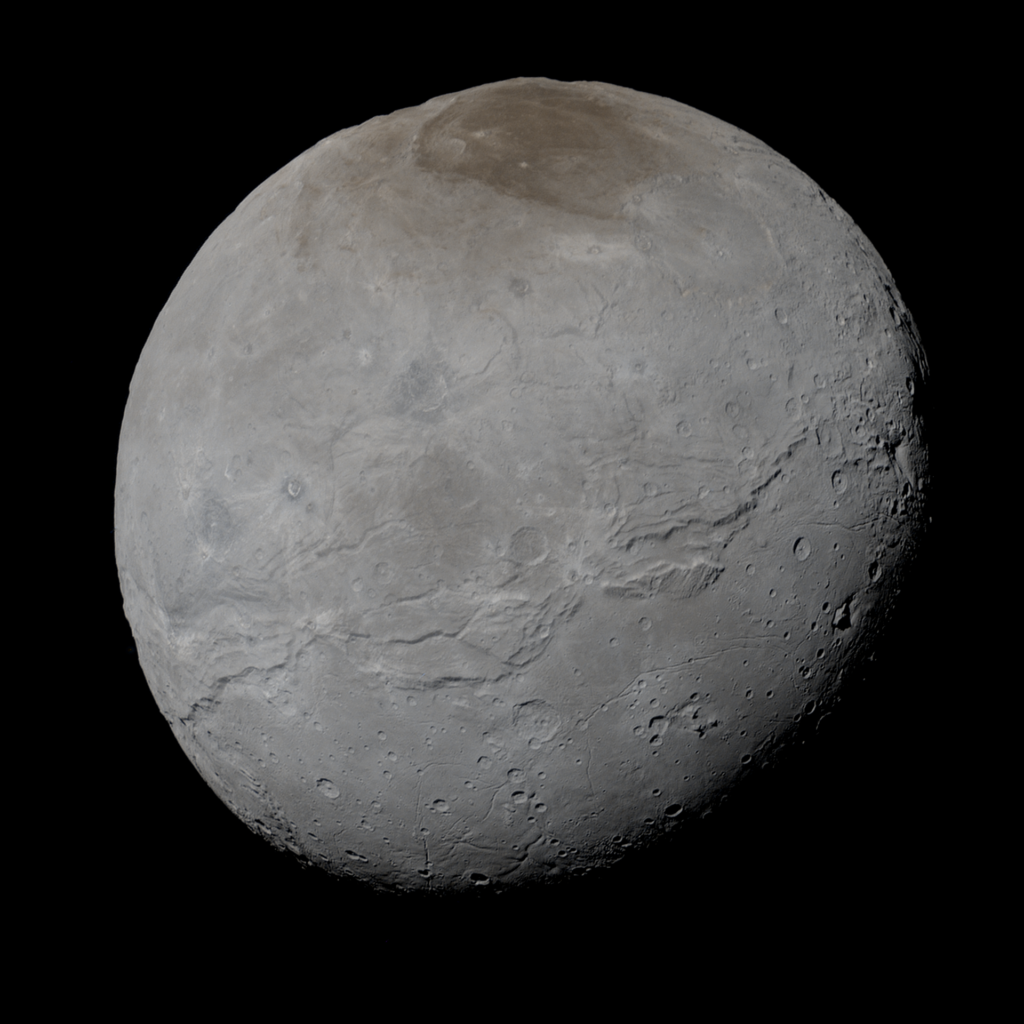
Physical Characteristics of Charon
| Characteristic | Actual Measurement | Scaled to our model |
| Ave. Diameter | 753 miles (9.5% of Earth) | 1.23 inches |
| Mass | 1.59 x 10²¹ kg (0.027% of Earth) | |
| Surface Gravity | 0.288 m/s2 (2.9% of Earth) |
Visualizing Pluto/Charon in our scale model of the solar system
A Tennis Ball
In this model of the solar system, Pluto would be a little less than 2 1/2″ in diameter, which is slightly smaller than a regulation tennis ball.

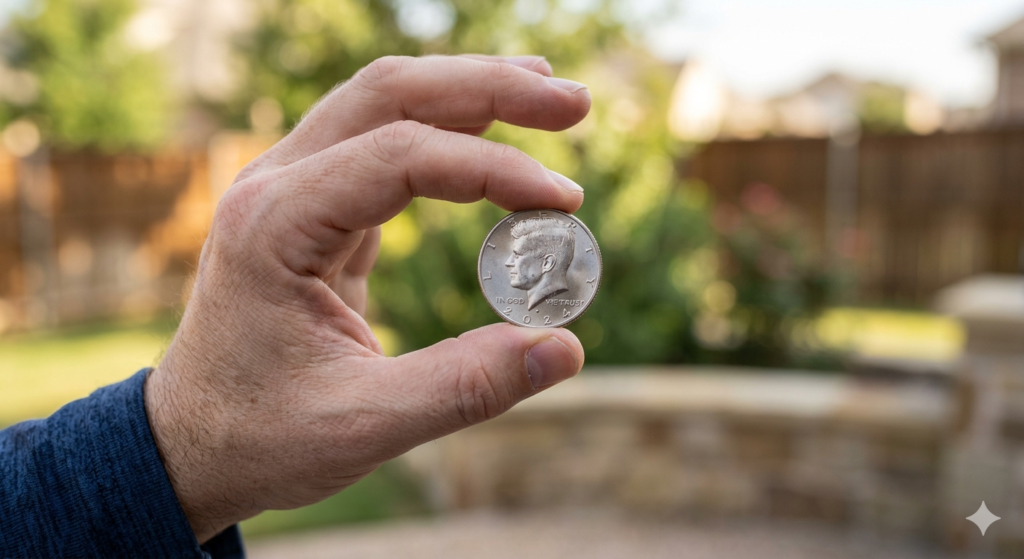
A US Half-Dollar coin
In this model of the solar system, Charon would be about 1 1/4″ in diameter, which is the size of a US half-dollar coin.
And this is about what Pluto and Charon would look like together in our model of the solar system.

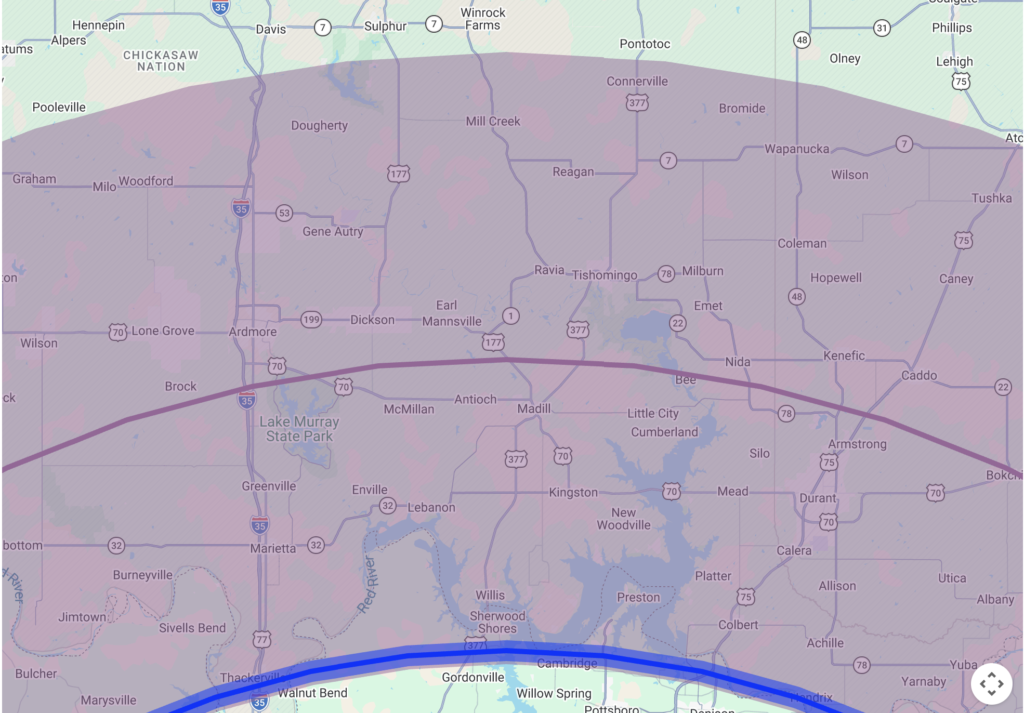
Here is what the orbital path of Pluto would look like overlaid north of Dallas. Visit our orbits page to see this on an interactive map.
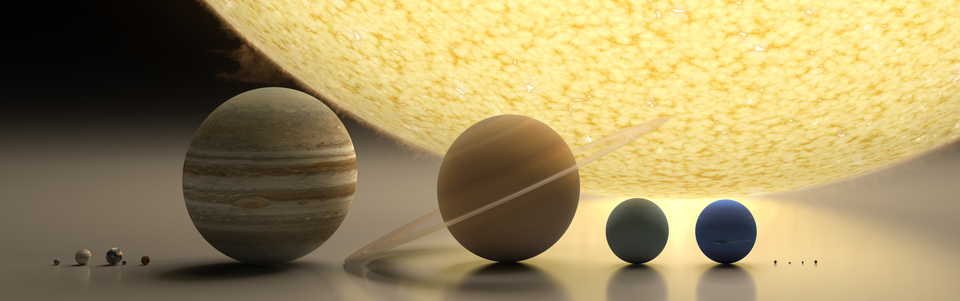
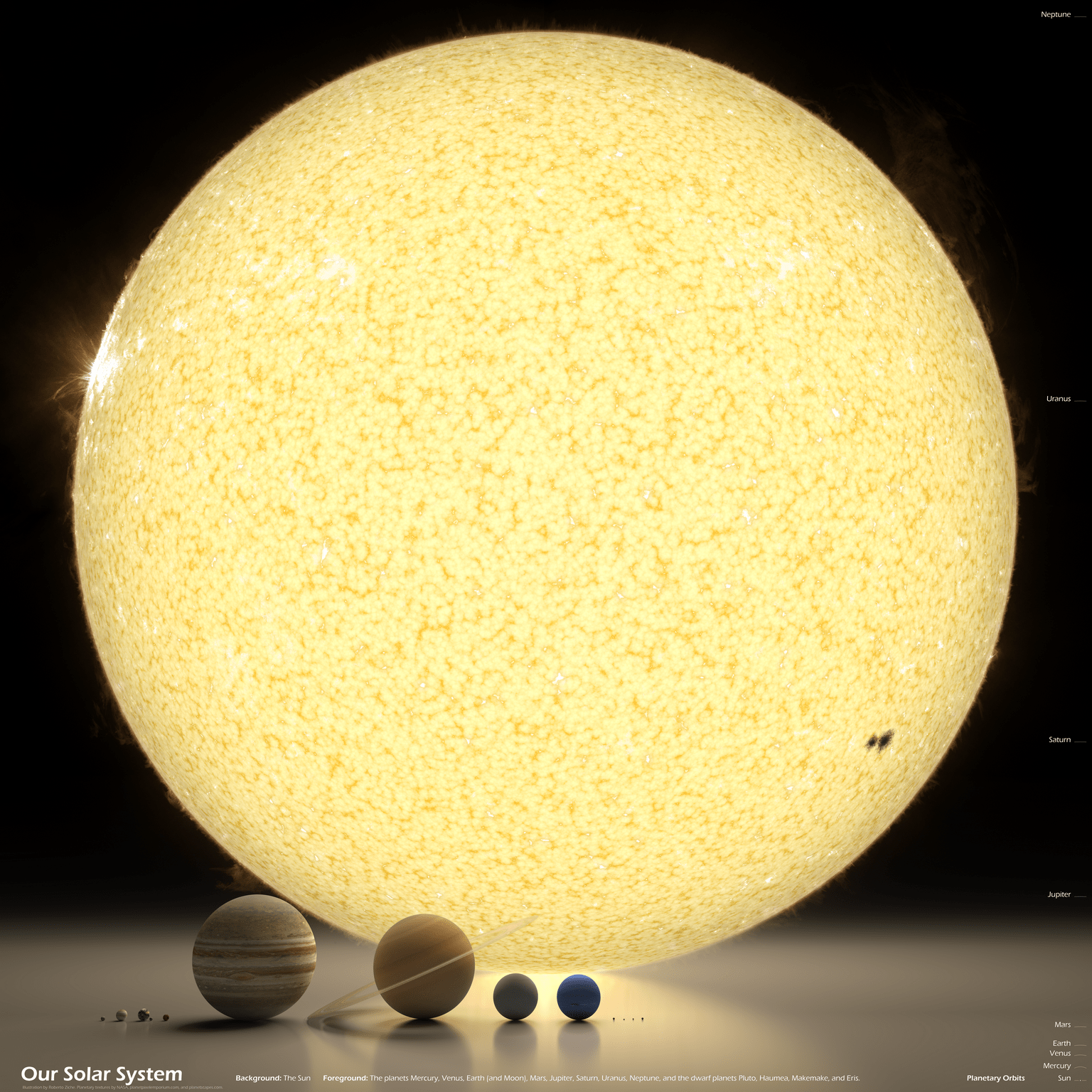
Visualizing the primary objects in the solar system, rendered to scale